Road Safety Insights
What South Africa Can Learn From Vietnam’s Solar Road Stud Trial
A mountain-road pilot in Vietnam offers a timely look at how solar-powered LED road studs could help make hazardous South African routes more visible after dark and in adverse weather.
Bring clearer guidance to the roads that need it most
A Practical Trial in Vietnam
Solar-Powered Studs Tested on National Highway No. 6
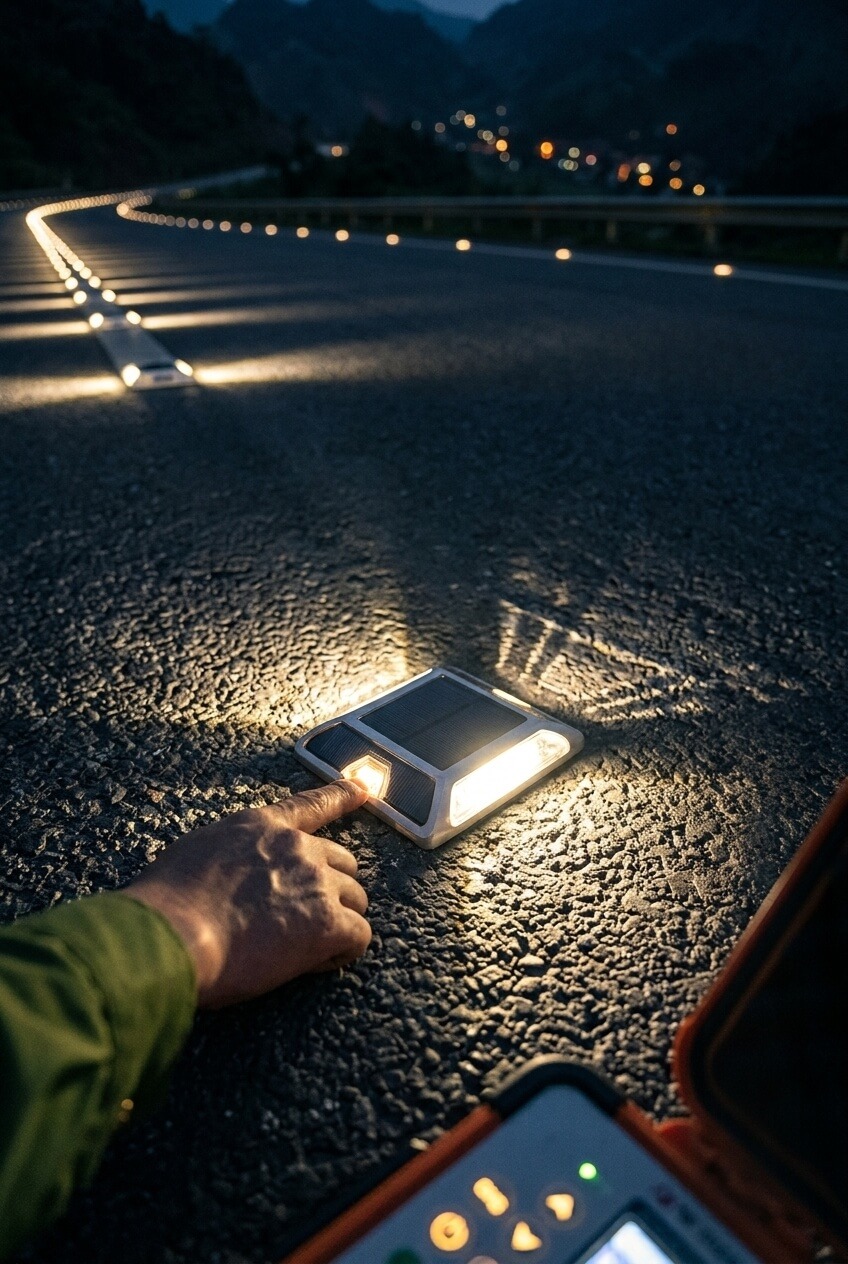
Vietnam’s road authorities are testing self-illuminating solar-powered LED road studs on a mountainous stretch of National Highway No. 6, offering a compelling blueprint for modernizing hazardous road infrastructure. The pilot project specifically targets driving environments where conventional painted lane markings and standard passive reflectors routinely fail: torrential rain, dense fog, total darkness, and the severely restricted sightlines caused by steep inclines and sharp, winding bends. Unlike traditional glass or plastic cat’s eyes that rely entirely on a vehicle’s headlights bouncing back toward the driver, these units absorb solar energy during daylight hours and emit their own bright, active LED illumination throughout the night. By projecting a continuous, unmistakable ribbon of light well ahead of oncoming traffic, the studs provide motorists with critical extra seconds to read the road geometry, adjust their speed, and make safer driving decisions before entering dangerous curves.
For South Africa, adopting similar active road delineation trials could deliver transformative safety and operational benefits across both public highways and private commercial corridors. South African motorists frequently navigate high-risk routes characterized by unpredictable weather, unlit rural stretches, and steep mountain passes, from the mist belts of KwaZulu-Natal and Mpumalanga to the winding coastal and mountain roads of the Western Cape. In these conditions, faded road paint and standard reflectors quickly disappear in heavy downpours or glare, leaving drivers guessing where lanes begin and end. Self-illuminating solar road studs cut directly through rain, mist, and darkness, giving commuters, long-haul freight trucks, and emergency vehicles clear visual guidance hundreds of metres in advance.
Beyond rural highways and mountain passes, similar deployments offer immediate value for South African municipalities, civil contractors, and commercial site operators. Active solar road studs require zero electrical trenching, cabling, or connection to the national power grid, making them completely immune to load-shedding and localized power outages. For roadworks and active construction zones, where temporary lane shifts and uneven surfaces pose major nighttime hazards, solar studs can be installed rapidly to guide traffic safely without relying on fuel-powered generators or vulnerable wiring prone to copper theft.
Industrial estates, mining operations, logistics depots, and residential security estates across South Africa face comparable visibility challenges. Heavy-duty vehicles operating at night in poorly lit loading yards, haul roads, or sharp internal intersections risk costly collisions and infrastructure damage when boundary lines are obscured. Deploying durable, high-load solar LED studs along kerbs, pedestrian crossings, and tight turning circles provides round-the-clock, maintenance-free perimeter delineation.
Ultimately, Vietnam’s National Highway No. 6 pilot underscores a straightforward reality in modern traffic engineering: passive markings are no longer enough where visibility is compromised. By testing and rolling out solar-powered LED road studs across high-accident zones, construction corridors, and commercial facilities, South African road authorities and property managers can significantly reduce nighttime collisions, lower long-term infrastructure maintenance costs, and protect lives on the road.