
The R15,000 Parking Mistake Outside Your Office
A routine bump in a fleet parking bay can become a costly repair, an insurance claim and another vehicle off the road.
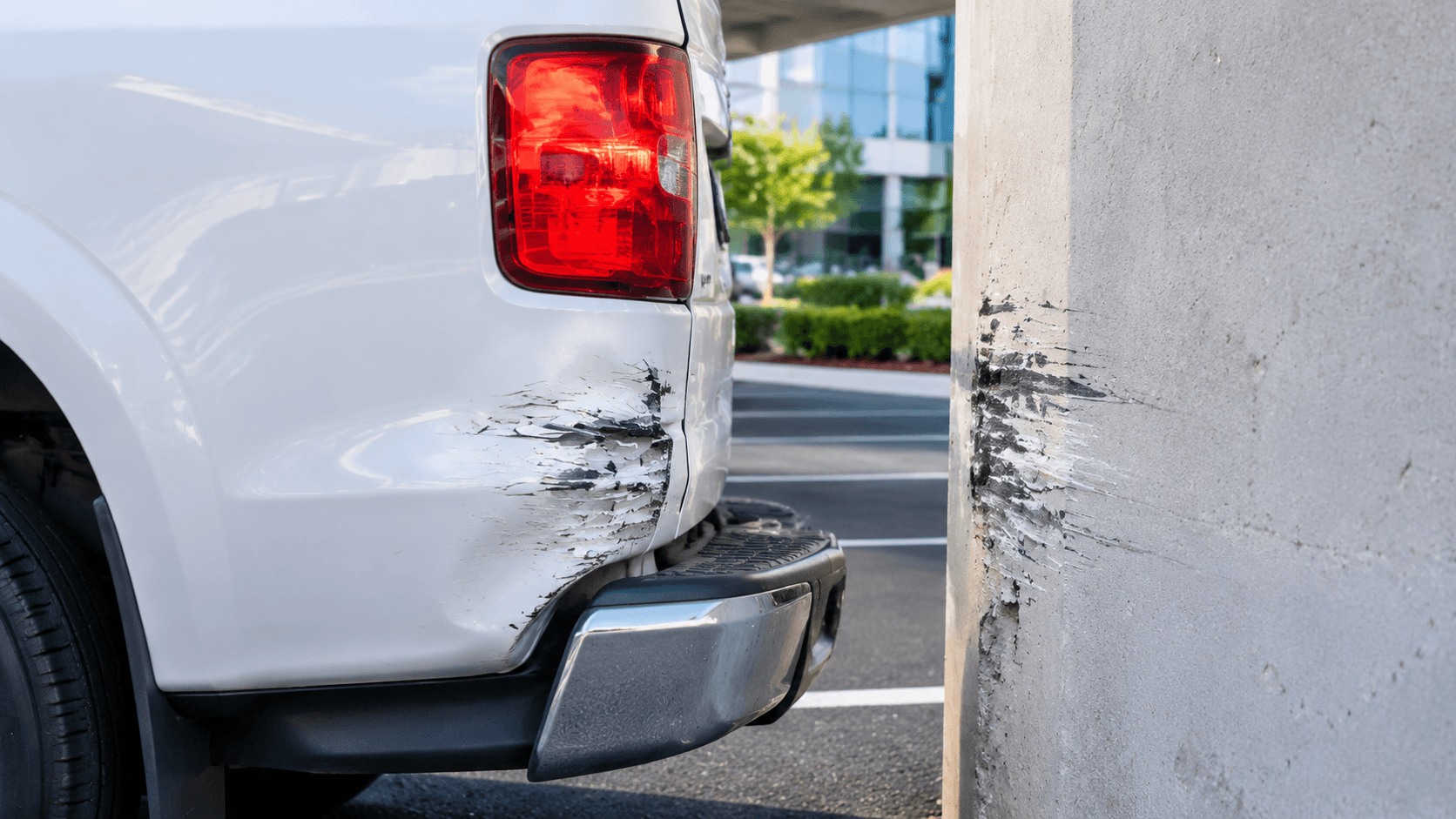
The hidden cost of a parking-bay bump
Small impacts. Expensive consequences.
A bakkie reverses into a wall. A delivery van catches a curb. Each incident may leave only a scrape or cracked light, but repeated across a fleet, those small repairs quickly consume a maintenance budget. And the panel-beater quote is only part of the bill.
Insurance excess payments, claim administration and time spent arranging repairs all add work for operations teams. And when a vehicle is off the road, deliveries and site visits may even need to be reassigned.
Parking damage reaches beyond the fleet, too. Tow bars and bumpers can crack walls, mark building facades, flatten landscaping or encroach on pedestrian areas, turning an everyday parking error into a property repair and a site-safety concern.
Why painted lines cannot stop a rolling vehicle

Blind spots hide the stopping point
From a bakkie or delivery van, drivers cannot always see the curb, wall or walkway beyond the bumper or tow bar. Judging the last few centimetres becomes guesswork.

Paint guides position, not distance
Bay markings show where a vehicle belongs, but offer no physical cue when its tyres reach a safe stopping point. A vehicle can sit between the lines and still strike a wall.

Busy bays leave little margin
Low light, rain and neighbouring vehicles make distances harder to judge. Without a tactile stopping point, a small miscalculation can put a bumper into a walkway or another vehicle.
A Physical Stop for Safer Parking Bays
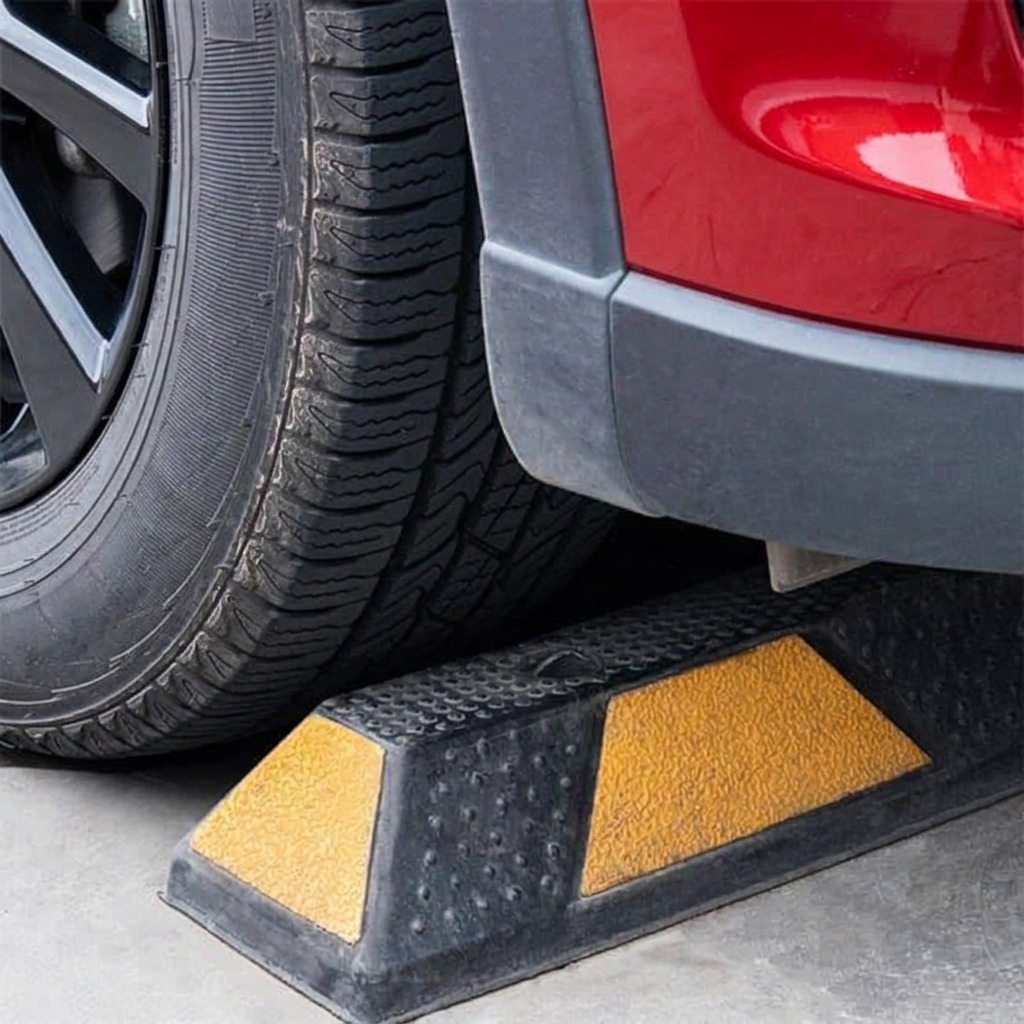
Fleet Parking Bays
Give bakkies and delivery vehicles a clear stopping point before bumpers or tow bars reach the wall, without retraining drivers or fitting sensors.
Office Parking Areas
Position heavy-duty rubber stoppers where tyres should stop, helping prevent everyday parking knocks during busy arrivals and departures.
Walkway Protection
Keep parked vehicles from rolling into pedestrian routes, landscaping and building edges with a simple, dependable physical boundary.
A Better Parking Cue, Built for Daily Use
Painted lines help drivers find a bay, but they cannot tell a driver when to stop. A rubber wheel stopper provides gentle resistance at the tyre, giving immediate tactile feedback before a bumper reaches a wall or kerb. Reflective panels make the stopping point easier to spot in shaded garages, low light and rain. Built for repeated use by cars, bakkies and light commercial vehicles, heavy-duty rubber helps protect both your fleet and the surrounding site infrastructure without adding sensors or complicated upkeep.

Rubber Stoppers vs Concrete and Painted Lines
- Tactile stopping feedback 90%
- Visibility with reflective panels 85%
- Resistance to chipping 90%
- Building and walkway protection 85%
- Low-maintenance suitability 90%
Concrete Blocks and Painted Lines
- Tactile stopping feedback 45%
- Visibility in low light 25%
- Resistance to chipping or wear 30%
- Building and walkway protection 40%
- Low-maintenance suitability 35%
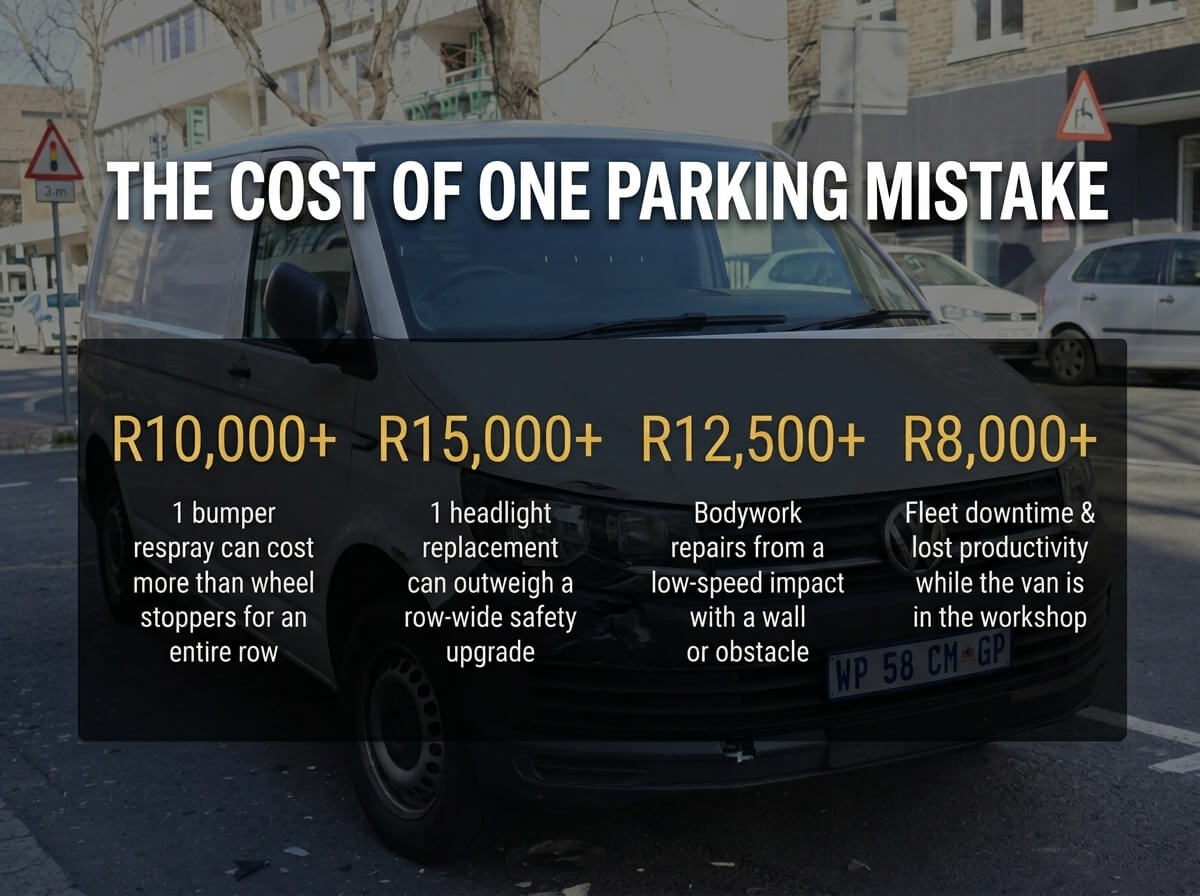
Make Your Parking Bays Safer
Manage a fleet or commercial site in South Africa? Contact Solar Q Lighting to discuss heavy-duty wheel stoppers and road-safety hardware suited to your vehicles, bays and daily traffic.